
SUPPORT LIVE MUSIC!
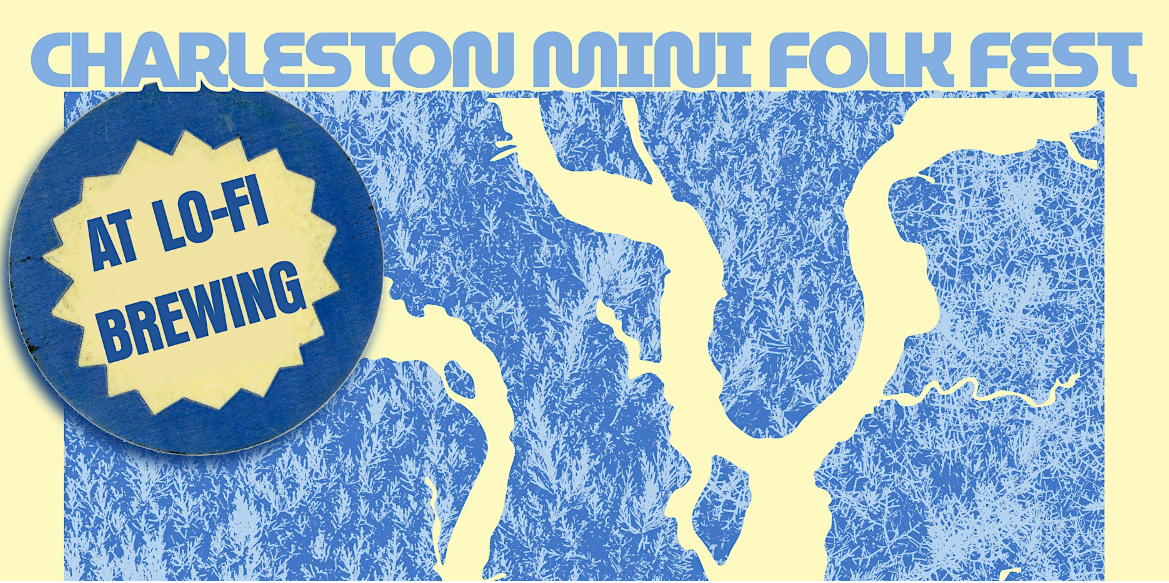
LO-Fi Brewing – Pizza & Kitchen — From Brewery to Independent Music Venue
LO-Fi Brewing has evolved into one of the Charleston area’s more unusual independent live-music spaces—a place where the line between brewery, warehouse, neighborhood hangout, and underground music venue has become increasingly blurred. Its story is closely tied to founder Jason Caughman, a brewer and musician whose original vision for LO-Fi included live music almost from the beginning.
Founder and Early History
LO-Fi was founded by Jason Caughman, a South Carolina native who had already built a substantial résumé in craft beer before returning to Charleston. Caughman spent about a decade in the Asheville area, where he was a co-founder of Pisgah Brewing Company and also became involved in the restaurant business. He eventually returned to the Lowcountry and established LO-Fi in a former automobile dealership at 2038 Meeting Street Road. Contemporary reports date the brewery's beginnings to 2015, with Charleston Magazine listing its establishment in February 2016.
The cavernous former dealership proved to be important to what LO-Fi would eventually become. Rather than transforming it into an elaborate, polished brewpub, Caughman retained much of the building's raw industrial character. A custom 20-barrel brewing system went into the space, with early beers including LO-Fi Lager, Blueberry Wheat and IPA.
Caughman's approach was somewhat contrary to the craft-beer boom of the period. Instead of constantly producing new beers, he wanted to concentrate on a small number and make them particularly well. His Mexican-style lager became especially associated with the brewery; in 2025, it was runner-up in Charleston City Paper's Best Locally Brewed Lager category.
Music, however, was already part of the plan. A 2015 account of the brewery's launch said the future taproom was intended to include live music, while a 2016 announcement described plans for an on-site taproom, food and a live-music venue.
How Music Became Part of LO-Fi's Identity
LO-Fi's emergence as a music venue makes more sense when you understand Caughman's personality. He's a musician himself. In a 2018 Charleston City Paper profile, a reporter visiting the brewery on a Wednesday afternoon found Caughman playing music with friends inside the dark warehouse taproom. At the time, he was already talking about possibly expanding the space and building a stage.
That informal atmosphere ultimately became one of LO-Fi's strengths.
Instead of feeling like a conventional concert hall that happens to sell beer, LO-Fi feels more like someone discovered a huge warehouse, put a brewery and stage inside it, and invited Charleston's musicians and artists to take it over.
The building's industrial character gives concerts a different atmosphere from Charleston's traditional theaters and clubs. The open room can accommodate bands, audiences, art installations, food pop-ups and unusual multimedia performances without losing the relaxed personality of a brewery.
By the early 2020s, music was no longer simply an occasional addition to the taproom. LO-Fi was regularly appearing in Charleston music listings, and Charleston City Paper advised brewery visitors to check the schedule specifically for live performances. Songkick's concert archive now records dozens of past concerts at the venue.
A Home for Charleston's DIY Music Community
Perhaps LO-Fi's greatest importance as a venue has been its willingness to provide space for music and events that don't always fit neatly into Charleston's larger clubs.
The programming has crossed genres—indie rock, punk, psychedelic music, hip-hop, electronic music, DJs and experimental performances—and the brewery has also hosted events combining music with visual art, food and performance.
A good example came in May 2022 with Simple Fest. Charleston band The Simplicity partnered with LO-Fi to create a festival celebrating Charleston's DIY creative community. Rather than simply booking several bands, the event combined music, food and art, illustrating the kind of grassroots cultural gathering LO-Fi's warehouse could accommodate.
LO-Fi has also provided a platform for Charleston's independent hip-hop scene. In April 2023, it hosted Underground 7.0, an event showcasing independent area hip-hop performers.
That diversity is significant. LO-Fi hasn't tried to define itself around one particular musical genre. Its identity is more closely connected to independent culture itself.
Memorable Events
Several events help illustrate how far LO-Fi has moved beyond the idea of a conventional brewery taproom.
Simple Fest — 2022 brought together musicians, artists and food in a celebration of Charleston's DIY creative scene. It demonstrated LO-Fi's ability to function as a small festival site rather than simply a room for individual concerts.
Another particularly unusual event was Cirque Du So-Lazer in July 2023. LO-Fi was transformed into a multimedia performance space combining electronic music with circus performers, aerial acrobatics, burlesque, fire and LED artists, lasers and live visual effects. It is a good example of the experimental programming that the warehouse setting makes possible.
Even the brewery's Sunday gatherings became miniature cultural events. In 2021, former Rosalie's owners Leah Highfield and Jeremy Williams established their High Pie pizza residency at LO-Fi, with musicians such as 2 Slices and Oukuo joining the Sunday events. One Sunday produced an unexpected celebrity visit when Mandy Moore and musician Taylor Goldsmith of Dawes stopped by for pizza.
More recently, LO-Fi has continued to provide space for culturally focused dance and music events. In May 2026 it hosted another installment of BLACK PEOPLE. LOVE. HOUSE MUSIC., a Charleston house-music event highlighting the Black, Latino and LGBTQ+ roots of house culture and partnering that edition with the International African American Museum as its nonprofit collaborator.
What Makes LO-Fi Special
What separates LO-Fi from many Charleston breweries is that the music doesn't feel like an amenity added to sell more beer. Music and brewing grew together as parts of the same idea.
Caughman's background as both brewer and musician helped create a place that is intentionally a little rough around the edges. LO-Fi's dark, industrial former dealership isn't trying to imitate a historic theater or a conventional nightclub. That lack of polish is part of its character.
It also fills an important niche in Charleston's music ecosystem. Large venues are necessary for established touring performers, but a healthy music city also needs places where local bands can experiment, emerging artists can build audiences, promoters can take chances and several parts of the creative community can occupy the same room.
LO-Fi has increasingly become one of those places.
Nearly a decade after Caughman opened the brewery, the original idea of combining beer, music and an unconventional industrial space has become central to LO-Fi's identity. What began as a brewery in an old car dealership has grown organically into a cultural gathering place—one that reflects the independent, slightly strange and deeply creative side of Charleston's music community.