

Every week we shine a spotlight on the dedicated people and places that make it possible for artist to share and connect to audiences!
Every week I want to shine a light on the people and places that support live music. We are grateful to have them!
Make sure and visit and support them!
CHARLESTON MUSIC HALL
Housed inside the beautifully restored 1850 South Carolina Railroad Depot, Charleston Music Hall is one of the city's premier performance venues. While the historic building predates the venue, today's Music Hall is operated by a team dedicated to preserving Charleston's cultural heritage while presenting nationally acclaimed musicians, comedians, and community events. Its intimate theater setting, excellent acoustics, and rich history make every performance memorable.
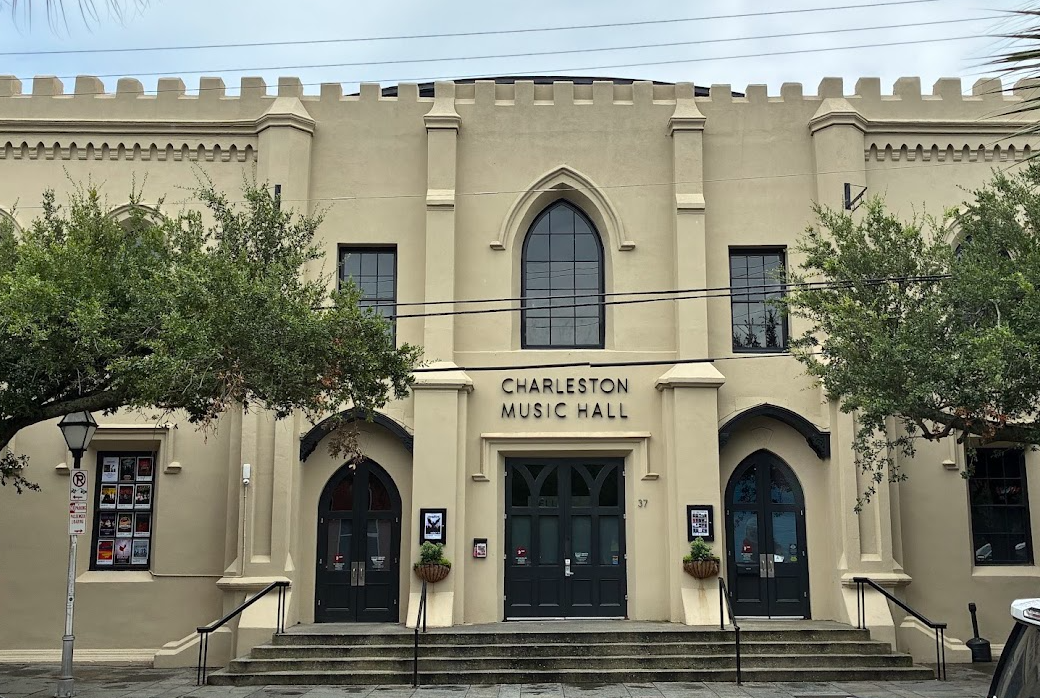
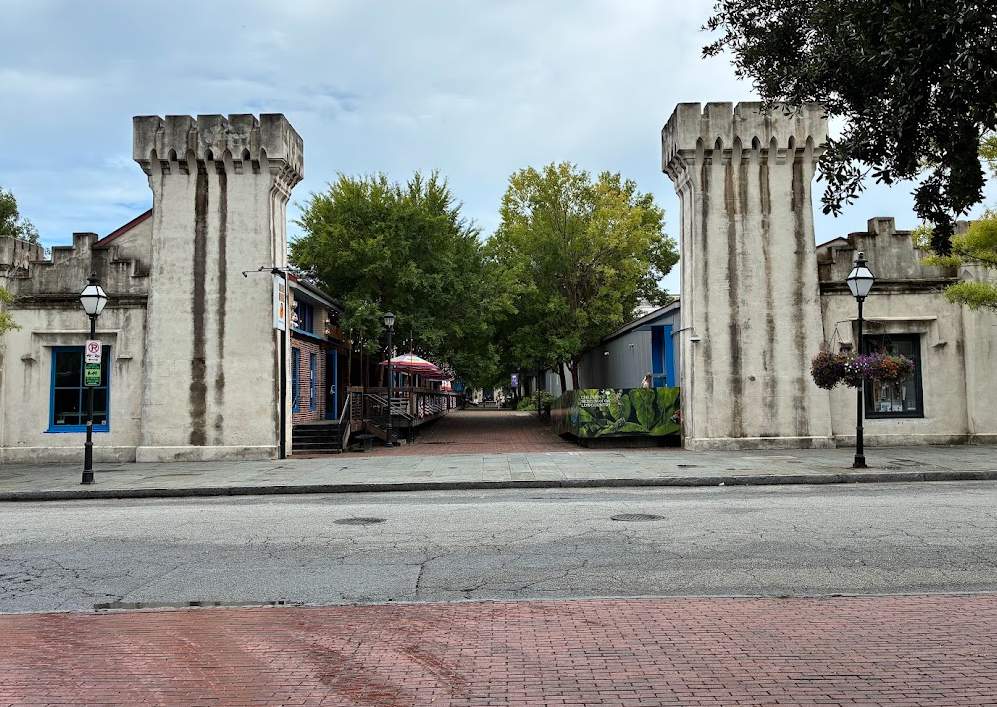
Charleston Music Hall — From Railroad Depot to Charleston Listening Room
The Charleston Music Hall is unusual among Charleston's music venues because its story begins nearly 150 years before its first modern concert. The building at 37 John Street has survived the railroad era, the Civil War period, the 1886 Charleston earthquake, decades of industrial use and roughly 60 years of vacancy before being rescued and transformed into a performance hall. Today, it is one of Charleston's most distinctive places to hear music.
The original "founders": the South Carolina Railroad
Unlike Music Farm or Tin Roof, Charleston Music Hall wasn't founded by musicians opening a club. Its origins date to 1849–1850, when the building was constructed as a passenger station for the South Carolina Railroad.
Known as the Tower Depot, it was designed by Charleston architect Edward C. Jones in the Gothic Revival style. The original building was considerably more dramatic than what visitors see today. A three-story tower projected toward John Street, while the main entrance was reportedly large enough for a train to enter the building.
The depot belonged to a much larger railroad complex stretching through this part of Charleston, with passenger and freight depots, warehouses, repair shops and facilities for manufacturing and maintaining locomotives and railroad cars. The complex was also known as the Camden Depot, reflecting the railroad's connection with Camden, South Carolina.
That history gives the Music Hall a character that is difficult to manufacture. When audiences walk into the building today, they aren't entering a modern concert hall designed to look historic—they're entering a genuine piece of Charleston's 19th-century transportation history.
Earthquake, industry and abandonment
The building's life as a railroad depot didn't last forever. It was later adapted for industrial purposes, including offices, shops, storage, spinning and carding operations.
Then came one of the defining events in Charleston history: the earthquake of August 31, 1886.
The earthquake destroyed the depot's three-story tower and severely damaged the complex. Much of the original structure was demolished, while the surviving portion continued to be used primarily for storage.
After the associated bagging company closed during the Great Depression, the property eventually passed to the Chicco family. The old depot then sat largely vacant and deteriorating for approximately six decades.
It could easily have disappeared.
Instead, its next chapter turned it into one of Charleston's most recognizable cultural spaces.
The founders of the modern Charleston Music Hall
The organization most responsible for creating the Music Hall we recognize today was the Bennett-Hofford Company, the Charleston development and construction firm known for historic rehabilitation projects.
In the mid-1990s, Bennett-Hofford undertook the remarkable task of converting the derelict former railroad building into a first-class performing arts venue while preserving the architectural character that made the building special. The Music Hall's own history dates that transformation to 1995, while its venue materials note that work began in 1994 before the full-service venue opened in 1995.
So it is more accurate to describe Bennett-Hofford as the creator or founding developer of the modern Charleston Music Hall, rather than suggesting that an individual music promoter originally founded it.
Their decision was important culturally as well as architecturally: rather than demolishing an obsolete industrial structure, they gave it a new life centered around music, theater and community gatherings.
A very different kind of Charleston music venue
What makes the Music Hall special is how different it feels from Music Farm, Charleston Pour House or Tin Roof.
Those venues largely descend from the club tradition—standing audiences, bars, dancing and crowds gathered around a stage.
Charleston Music Hall is fundamentally a listening room.
The City of Charleston describes it in essentially those terms: an intimate environment designed to encourage interaction between artist and audience. Its theater-style configuration and acoustics allow performers to work with subtlety that can sometimes disappear in a standing rock club.
That makes it particularly well suited to singer-songwriters, acoustic performers, jazz, bluegrass, folk, Americana and artists who tell stories between songs.
At the same time, the room has proven remarkably versatile. Rock bands, comedians, orchestras, dance companies, authors, films, theatrical productions and community organizations have all used the stage.
David Byrne and one of the Hall's legendary nights
One artist specifically highlighted in the Music Hall's own history is David Byrne, the former Talking Heads frontman. The venue lists Byrne among the significant performers who have appeared there.
And among longtime Charleston concertgoers, his Music Hall appearance has achieved something approaching legendary status.
In local recollections, fans describe the sold-out Byrne performance as among the finest concerts they ever witnessed in Charleston, remembering multiple encores and the remarkable connection between performer, audience and room.
That illustrates what the Music Hall can do particularly well: put an internationally famous musician into a room small enough that the performance can still feel personal.
Joan Baez
Another especially fitting performer in the Hall's history is Joan Baez.
The Music Hall itself identifies Baez among the notable artists to have graced its stage.
Few performers better demonstrate the strengths of the room. Baez's music is centered on voice, lyrics, acoustic instruments and storytelling—the very qualities that benefit from a quiet theater with strong acoustics and an attentive audience.
Her appearance also illustrates the caliber of songwriter and cultural figure the venue has been able to attract despite being substantially more intimate than an arena or performing arts center.
Ricky Skaggs made Grammy history here
One of the most historically significant events at Charleston Music Hall wasn't merely a concert—it became a Grammy-winning recording.
Bluegrass legend Ricky Skaggs and Kentucky Thunder recorded Live at the Charleston Music Hall there. The recording was released in 2003 and subsequently won a Grammy. The venue proudly includes the achievement in its official history.
That is an important part of the Music Hall story because it demonstrates something musicians and audiences have long appreciated about the building: the room itself can become part of a performance.
A historic railroad depot in Charleston became the setting for a live recording recognized at the highest level of the American music industry.
A remarkably diverse stage
Over the decades, the Hall's programming has extended far beyond one genre.
Its extensive performance archive documents an extraordinary mixture of musicians, comedians, cultural figures and productions. That tradition continues today: in 2026 alone, the stage has hosted or scheduled artists ranging from Keb' Mo' and Chris Botti to St. Paul & the Broken Bones, Modest Mouse, Cowboy Junkies, Todd Rundgren, the Glenn Miller Orchestra and Charleston's own Charlton Singleton, alongside comedy, ballet, film events and Spoleto Festival USA performances.
That diversity is part of the Music Hall's identity. It doesn't really belong to one musical scene.
It belongs to Charleston's performing arts community as a whole.
A home for Charleston musicians, too
The Music Hall's importance isn't limited to touring stars.
Its stated mission includes presenting local, regional and national artists while encouraging local and community participation.
That matters in a city with a deep musical tradition.